Wine Etiquette: How to Navigate the Wine List With Confidence

Reading time: 10 minutes
When you recently found yourself at a Michelin-starred restaurant in New York and the sommelier handed you a twelve-page wine list with over 300 selections, did you not know exactly where to start? You're not alone. According to a 2023 study by the German Sommelier Union, 68 percent of guests at upscale restaurants feel unsure when it comes to choosing wine. Proper wine etiquette makes the difference between an average and an unforgettable date experience in a fine dining setting.
Especially in sugar dating, where upscale restaurant visits are the norm, solid wine knowledge is more than a nice extra qualification. It shows sophistication, an interest in culinary culture and the ability to move confidently in exclusive circles.
Understanding the Structure of Professional Wine Lists
A professional fine dining wine list usually follows a clear structure. Most renowned restaurants sort by grape variety, region of origin or flavor profile. The restaurant "Vendôme" in Bergisch Gladbach, Germany, for example, organizes its more than 800 selections by geographic origin, starting with German wineries.
The basic layout typically includes sparkling wines, white wines (light to full-bodied), rosé wines, red wines (light to powerful) and dessert wines. Within these categories you'll usually find a further breakdown by country and region. Important when reading the wine list: the year indicates the harvest vintage, not the bottling date.
A clever tip for beginners is to focus on the mid-price range. Restaurants often build their best value for money in here. The cheapest wines are frequently mass-produced, while the most expensive selections are often prestigious collector's items that don't necessarily taste better.
Reading the Wine List: Decoding the Most Important Terms
When you see terms like "terroir," "reserve" or "grand cru" on the list, you should know what they mean. Terroir refers to the sum of all site-related influences on the wine, from soil composition to microclimate. Reserve means different things depending on the country – in Spain at least three years of aging, while in Germany the term isn't protected.
The French classification is particularly complex: a "Grand Cru" from Bordeaux stands for the highest quality from top-tier sites. With Burgundy wines there are even "Premier Cru" and "Grand Cru," the latter being the top classification. According to the French wine authority INAO, the Grand Cru classification in Burgundy covers only about 1.5 percent of the total vineyard area.
Also look out for designations of origin like DOC (Italy), AOC (France) or VDP (Germany, for Prädikat wines). These guarantee controlled quality standards and a protected geographic origin. The European Union unified these systems in 2009 with the PDO (Protected Designation of Origin) regulation, which you sometimes find on newer labels. (In the US, the equivalent is the AVA, or American Viticultural Area, system, such as Napa Valley.)
How to Read a Professional Wine List Correctly
The layout of an upscale wine list follows a carefully thought-out system. Take your time to go through the list systematically. Begin with the category that suits your planned meal. With a multi-course menu, the wine pairing put together by the sommelier is often worthwhile.
Most fine dining restaurants offer two formats: wine by the glass or by the bottle. A standard bottle holds 750 milliliters, which equals about five 5-ounce glasses. For a dinner for two, the bottle is usually more economical if both of you drink wine. Ordering by the glass offers flexibility, especially if you choose different dishes.
An often overlooked aspect: the vintage says a lot about quality and character. A 2018 Bordeaux came from an exceptional vintage with ideal weather conditions, while 2021 was challenging in many regions. Reputable sommeliers are happy to mention details like these when you show interest.
Understanding Pricing
Restaurants usually mark up wine by a factor of 2.5 to 4 over the purchase price. A wine at $60 on the list costs the restaurateur about $15 to $24 to buy. This markup covers not only the product but also storage, tied-up capital, the sommelier's advice and service.
Interestingly, the percentage profit margin on more expensive wines is often lower. A Château Margaux for $800 may only be marked up by a factor of 2, while a house wine is marked up by a factor of 4. This explains why connoisseurs sometimes deliberately reach for the higher-priced selections.
Using Sommelier Advice Properly: Dealing With Restaurant Sommeliers Confidently
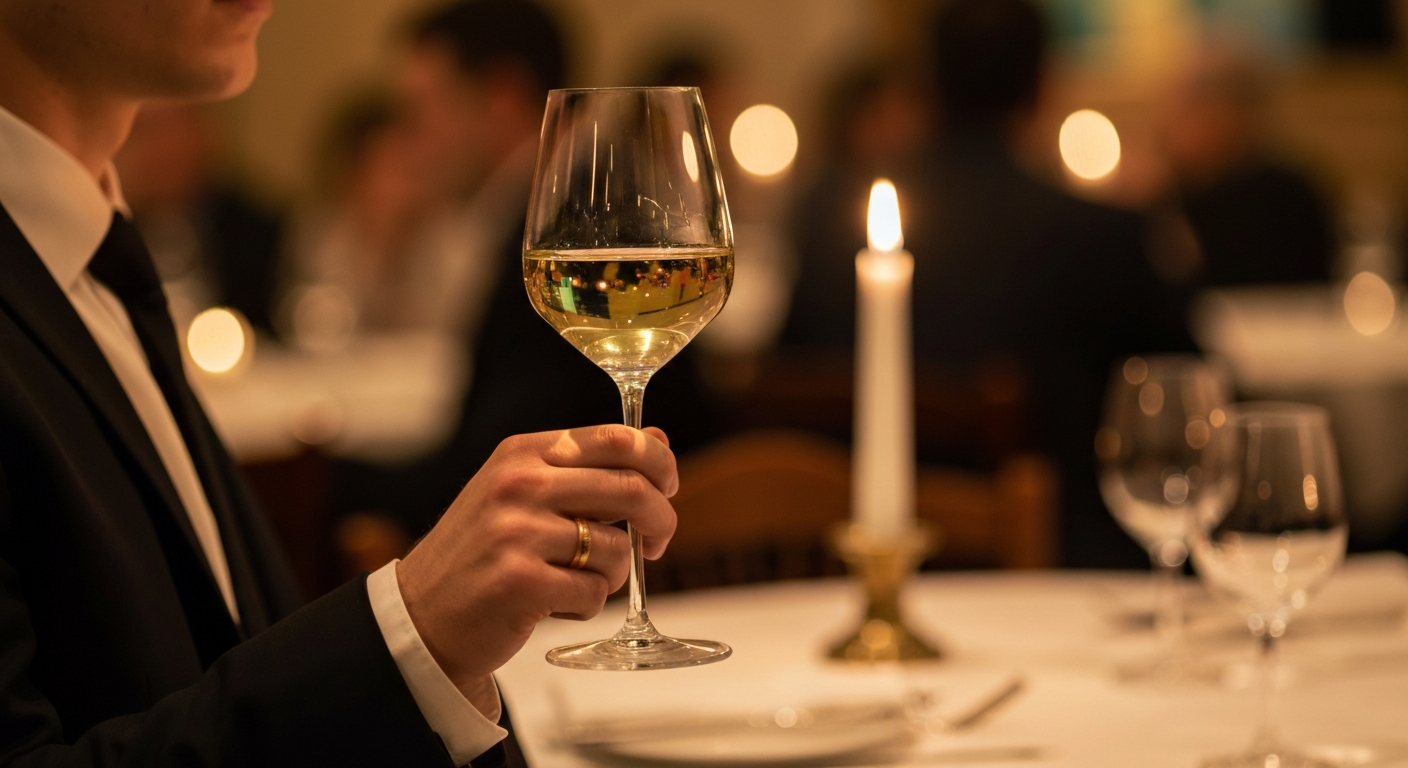
The sommelier is your most important ally when choosing wine. Contrary to what people often fear, asking for recommendations isn't a sign of ignorance – quite the opposite. Professional sommeliers appreciate the interest and are happy to help. Paula Bosch, named Germany's best sommelière in 2022 by the Association of German Sommeliers, stresses in interviews that open communication is the key to perfect pairing.
State your preferences specifically: instead of ordering "something good," say, for example, "I like fruity white wines with moderate acidity" or "I prefer full-bodied reds without too much tannin." Feel free to mention your budget too – a good sommelier will handle it discreetly. You can subtly point to a selection and ask: "What would you recommend in this price range?"
Don't hesitate to ask for a taste, especially when ordering by the glass. Many upscale restaurants offer small tastings before you decide. This is especially common with unfamiliar wineries or exceptional vintages and shows that you care about making the right choice.
Choosing Wine at a Restaurant: Which Wine Goes With Which Course
The basic principle of food pairing is: the wine should complement the food, not dominate it. In a multi-course menu, intensity typically builds from light to powerful wines. A classic five-course menu might look like this:
- Amuse-bouche: Crémant or a light sparkling wine such as a Riesling Sekt
- Appetizer (seafood): Mineral white wine, such as a Chablis or Grüner Veltliner
- Fish course: A fuller-bodied white wine like a Pinot Blanc or an aged Chardonnay
- Main course (meat): Robust red wine, for example a Bordeaux or Barolo
- Dessert: Sweet wine such as Sauternes or a noble sweet Riesling
For dishes with sauce, it's best to follow the sauce's flavor profile. A creamy sauce pairs well with buttery Chardonnays, while a red wine reduction calls for a tannic red. Acidity in the food, from lemon or tomatoes for example, harmonizes with acid-driven wines.
A common mistake: wine that's too heavy for the wrong course. A mighty Amarone with a delicate scallop completely overwhelms the subtle flavor. Conversely, a light Pinot Grigio feels lost next to a robust beef tenderloin. The rule of thumb: the more intense the dish, the more powerful the wine can be.
Observing Wine Etiquette at Upscale Restaurants
Formal wine etiquette has loosened considerably since the 1990s, but there are still basic rules. When your companion orders the wine, it's his job to taste the sample – regardless of gender. Increasingly, though, the person who chose the wine does the tasting.
For the wine tasting, you first check the color and clarity visually, then the aroma and finally the taste. A brief nod signals approval to the sommelier. The tasting isn't a taste test but quality control – you're checking for cork taint or oxidation, not whether you fundamentally like the wine.
You hold the wine glass by the stem, never by the bowl. This prevents hand warmth from heating the wine and fingerprints from smudging the glass. For red wine, large, round-bowled glasses are common, allowing contact with oxygen. White wine is served in narrower glasses to keep it cool longer. According to a 2015 study from the University of Oxford, glass shape really does influence aroma perception considerably.
The Right Timing for Refills
In upscale restaurants, the service staff handle refills. If not, the rule is: the host pours, never himself first. You fill the glass to a maximum of one third for red wine and half for white. This allows swirling and optimal aroma development.
When someone pours for you, you don't need to lift the glass – it stays on the table. A slight nod or smile as thanks is enough. If you don't want any more wine, you signal this with a slight hand movement over the glass before it's refilled.
Handling Fine Dining Situations With Confidence
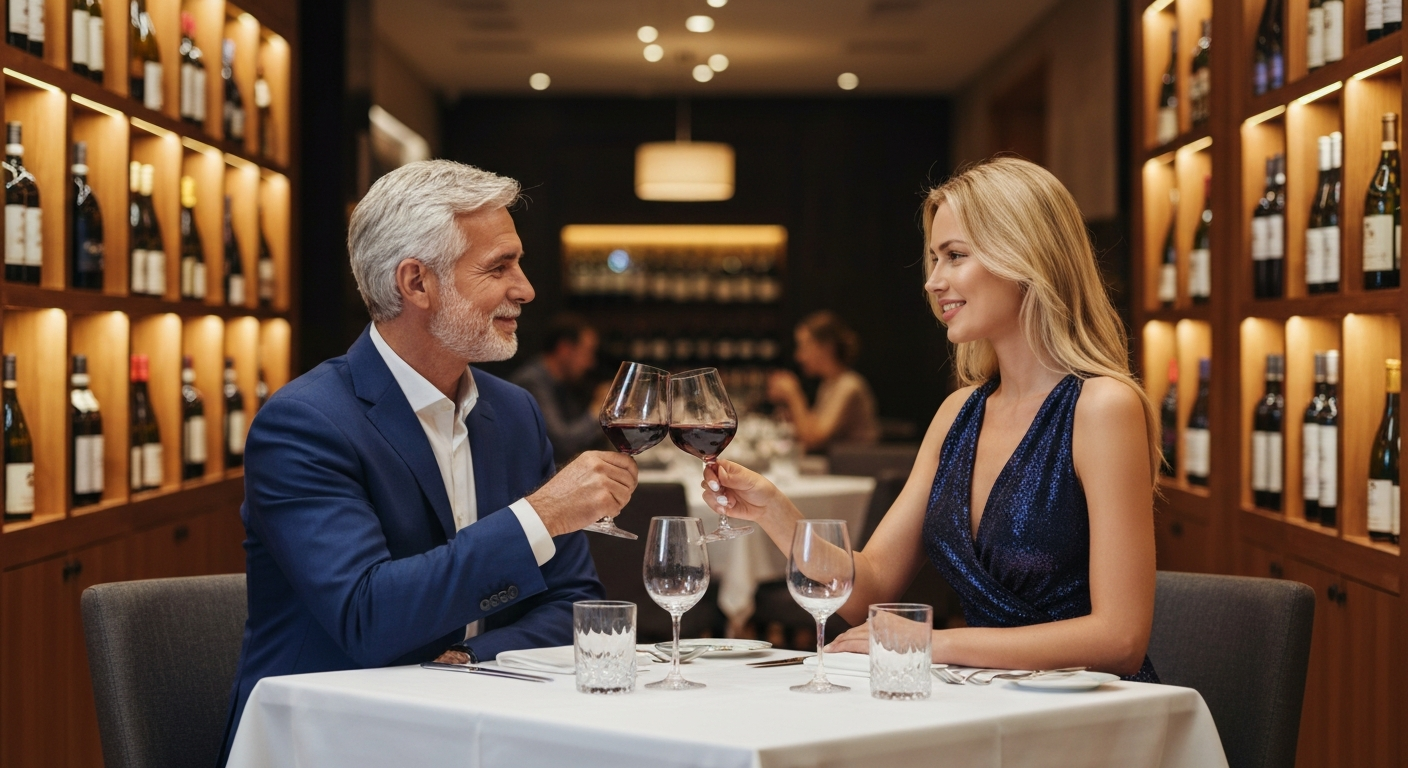
At business dinners or important dates as part of an upscale lifestyle, knowing wine is a real advantage. You don't have to be an expert, but basic knowledge of important wine regions and grape varieties conveys sophistication. If your date orders a 2015 Brunello di Montalcino, for example, you can mention that 2015 was an exceptional vintage in Tuscany.
Avoid typical beginner mistakes like complaining about prices or overdoing the expert act. Nothing is less attractive than faked wine knowledge, which is quickly exposed. Genuine interest and a willingness to learn go over far better. Much like with gallery opening etiquette, the rule is: authenticity beats showiness.
At top restaurants like "Aqua" in Wolfsburg or "The Table" in Hamburg, you can also ask for a cellar tour. Many sommeliers are happy to offer this, especially when genuine interest is apparent. It's an excellent opportunity to learn more about the house's wine philosophy and leave a lasting impression.
Wine Knowledge as an Investment in Your Lifestyle
Learning wine etiquette is more than social polish – it's an investment in your presence in upscale circles. According to a 2023 survey by the German Wine Institute, 73 percent of respondents with high incomes say that wine knowledge makes a positive impression on business partners and in social situations.
Consider taking a wine seminar or a WSET (Wine & Spirit Education Trust) course. Level 1 is perfect for beginners and teaches basic knowledge of the most important grape varieties, regions and tasting techniques in one day. Courses like these are offered in all major cities and typically run between about $150 and $300 in the US (in Germany, 120 to 200 euros).
Private tastings at home with a small selection of different wines from the same growing region also train your palate. Three or four wines from different price ranges of the same region quickly show you where the differences lie and which characteristics appeal to you.
Frequently Asked Questions About Wine Etiquette
What do I do if the wine has cork taint?
Cork taint, recognizable by a musty smell of wet cardboard or cellar, affects statistically about two to three percent of all natural corks, according to the German Wine Institute. Discreetly inform the sommelier or waiter. Reputable restaurants will exchange the bottle without any fuss. You don't have to justify yourself – cork taint is a recognized quality problem.
Can I bring my own wine to a restaurant?
In the US, bringing your own wine depends on the restaurant and on state law. Many upscale restaurants allow it for a corkage fee, typically $25 to $75 per bottle, and some refuse it entirely. (In Germany it's legally permitted but frowned upon, with corkage between 15 and 50 euros.) Call ahead if you want to bring a special wine from your collection. It's only really appropriate for very special occasions like milestone birthdays.
How much should I tip for excellent wine advice?
In the US, 18 to 20 percent of the total bill is standard, and a bit more for outstanding service. (In Germany, 10 percent is typical.) For exceptional sommelier advice, such as with a multi-course menu with wine pairing, some guests give the sommelier a separate amount directly in addition to the general tip, especially if the wine advice was outstanding.
Which wine goes with which course in vegetarian menus?
Vegetarian dishes offer varied pairing possibilities. Earthy mushroom dishes pair well with mature Burgundy wines or Pinot Noir. Vegetable terrine harmonizes with fresh white wines like Sauvignon Blanc. For spicy Asian vegetable dishes, aromatic wines like Gewürztraminer are ideal. The method of preparation matters more than the ingredient itself – grilled vegetables can handle more robust wines than steamed ones.
How long should red wine breathe before serving?
Simply opening the bottle does little, since only a small surface is exposed to oxygen. Young, tannic red wine benefits from decanting into a carafe, which should be done 30 to 60 minutes before serving. Aged wine usually needs less time, sometimes only 15 minutes. In a restaurant, the sommelier makes this call. If you're unsure, ask for the recommendation for that specific wine.
Conclusion: Confidence Through Preparation and Openness
Wine etiquette may seem intimidating at first, but with the right basics it's easy to master. The most important tip: be authentic and show genuine interest. Nobody expects you to act like a sommelière. A basic understanding of the wine list, respectful treatment of the service staff and a willingness to learn new things make the difference.
Your next invitation to a fine dining evening is your chance to apply what you've learned. Prepare by looking at the restaurant's wine list online beforehand, if available. Note two or three interesting selections you'd like to learn more about. With this knowledge you'll navigate any upscale restaurant visit with confidence and leave a cultivated, self-assured impression. Start building your wine knowledge today – it's an investment that pays off at every exclusive dinner.