Caviar Tasting: Know Your Varieties and Enjoy in Style

Reading time: 9 minutes
When your sugar daddy presents a selection of caviar at your next exclusive dinner, you should be able to do more than politely nod. A well-informed caviar tasting doesn't just show your worldliness, it proves real knowledge of delicacies that is valued in upscale circles. The ability to tell Beluga from Osetra and recognize the nuances of different caviar varieties opens doors in a world where taste and style triumph over superficial conversation.
According to the Caviar Emptor organization, the global caviar market doubled to over $340 million between 2018 and 2023, with demand for authentic tasting experiences growing exponentially. This renaissance of caviar culture makes gourmet knowledge indispensable for anyone who wants to navigate upscale social circles.
The Most Important Caviar Varieties and How to Recognize Them
At a caviar tasting, the main thing is to tell the three premium varieties apart. Each comes from a different sturgeon species and has characteristic features you'll learn to recognize reliably with a bit of practice.
Beluga Caviar: The King of Delicacies
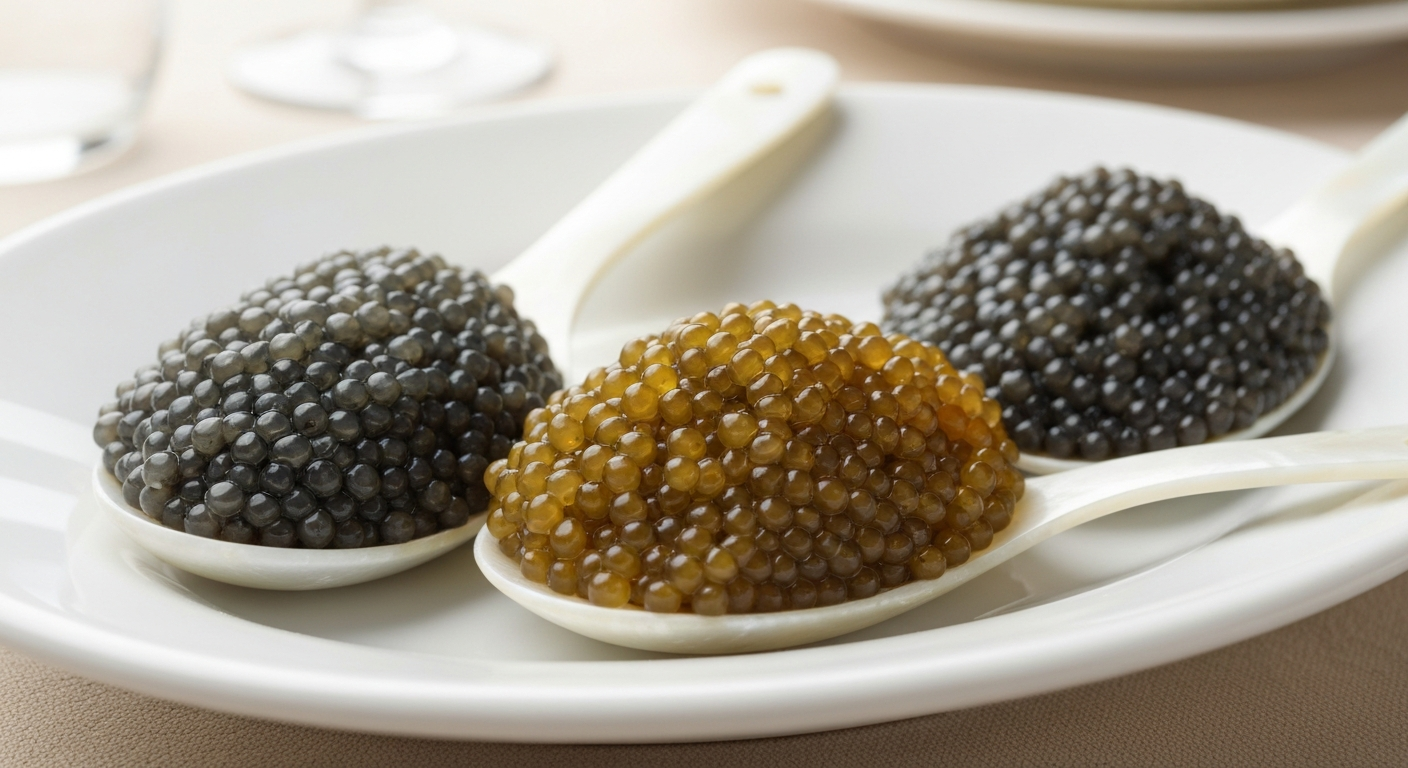
Beluga caviar comes from the European sturgeon, or beluga (Huso huso), and is considered the most expensive variety. The pearls measure 3.0 to 3.5 millimeters in diameter and range in color from light silver-gray to dark anthracite. The taste is exceptionally creamy with buttery notes and a gentle, nutty finish. A kilogram (2.2 pounds) of authentic Beluga caviar costs between $8,800 and $17,600, depending on the origin and the age of the sturgeon.
When tasting, pay attention to the delicate texture: Beluga pearls burst gently on the palate, never firm or crunchy. The color varies with the age of the sturgeon – the lighter the pearls, the older the fish and the more intense the flavor.
Osetra Caviar: The Versatile Choice
Osetra (also spelled Osietra or Ossetra) comes from the Russian sturgeon (Acipenser gueldenstaedtii) and offers a remarkable flavor palette. At 2.0 to 3.0 millimeters, the pearls are smaller than Beluga and come in colors from golden brown to olive green to deep brown. The taste is more complex than Beluga, with nutty, sometimes slightly fruity notes and a distinct mineral aftertaste.
Imperial Osetra, an especially light golden variety, was historically reserved for the Russian tsar's court. You recognize this variety by its amber tint and especially intense, almost buttery aroma. In price, Osetra ranges from $3,800 to $7,700 per kilogram.
Sevruga Caviar: The Accessible Premium Option
Sevruga comes from the stellate sturgeon (Acipenser stellatus) and has the smallest pearls of the three classic varieties – about 2.0 millimeters in diameter. The color ranges from light gray to black, and the flavor is more intense and saltier than the pricier varieties. Sevruga costs between $2,200 and $4,400 per kilogram and is an excellent introduction to caviar tasting.
How to Tell Different Caviar Varieties Apart at a Tasting
A professional caviar tasting follows clear rules you can confidently apply on your next exclusive date. Much like with wine etiquette, the rule here is: method before intuition.
The Right Tasting Order
Always start with the mildest variety and work up to the most intense. The classic order is: Beluga, Osetra, Sevruga. Between varieties, cleanse your palate with a sip of ice-cold water or a small piece of unsalted white bread. Never use lemon – it completely masks the subtle nuances.
Take about half a teaspoon of caviar with a mother-of-pearl spoon. Metal spoons are taboo because they transfer a metallic taste. Spread the pearls over your tongue and gently press them against your palate. Pay attention to three aspects: texture (how do the pearls burst?), flavor (buttery, nutty, mineral?), and finish (how long does the taste linger?). According to the International Caviar Importers Association, a trained palate needs at least 5-7 seconds to perceive all the flavor nuances.
Serving Caviar: The Essential Rules
Presentation matters as much as flavor itself at a caviar tasting. The wrong serving temperature or unsuitable accompaniments can ruin even the best caviar.
Temperature and Presentation
Caviar should be served at 28 to 39 degrees Fahrenheit (-2 to 4 degrees Celsius). In upscale restaurants, the tin is traditionally presented on crushed ice in a special caviar bowl. At home, you can use a shallow glass dish set inside a larger bowl of ice cubes. Open the tin only right before serving – oxidized caviar loses noticeable aroma within 15 minutes.
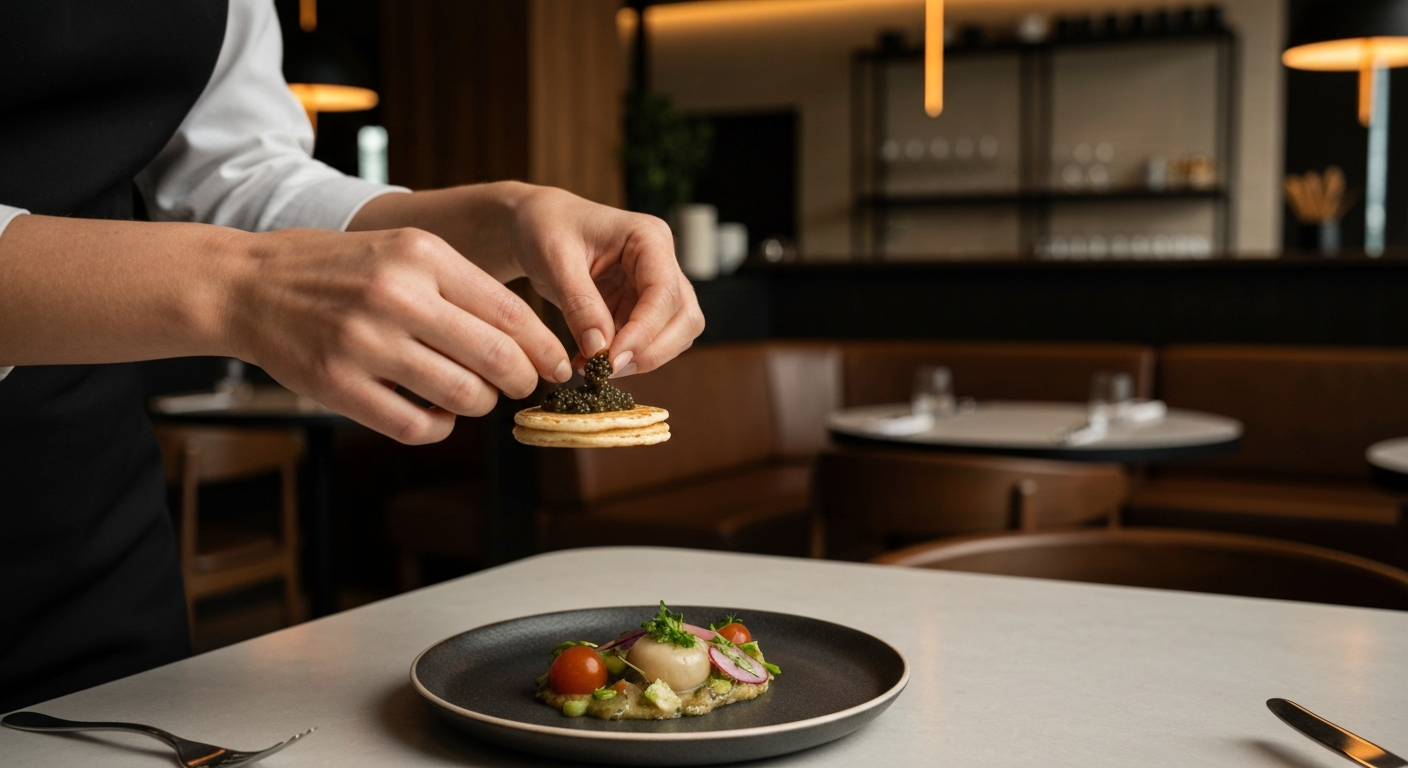
The classic presentation has three elements: caviar, blinis (small Russian pancakes), and crème fraîche. Finely chopped hard-boiled eggs (yolk and white separated), onions, and parsley are served alongside. These accompaniments are optional, however – purists enjoy caviar on its own.
Which Drinks Pair Best with Caviar
The classic pairing is ice-cold vodka, served at 0 degrees Fahrenheit (-18 degrees Celsius) in chilled glasses. Premium brands like Beluga Noble or Grey Goose complement the delicacy perfectly without overpowering it. A 1.35-ounce (4 cl) glass is drunk in one go, not sipped.
Champagne is the second classic choice. Choose a Brut or Extra Brut with a high Chardonnay content, such as Ruinart Blanc de Blancs or Krug Grande Cuvée. The bubbles should be fine, the acidity clear but not dominant. Serve the champagne at 46-50 degrees Fahrenheit (8-10 degrees Celsius). Sweeter champagne styles like Demi-Sec are entirely unsuitable.
A modern alternative is dry sake, especially Junmai Daiginjo quality. The umami notes harmonize exceptionally well with the minerality of the caviar. Try Dassai 23 or Kokuryu, for example, served at 59 degrees Fahrenheit (15 degrees Celsius).
Tasteful Accompaniments and Combinations
While purists enjoy caviar exclusively with a mother-of-pearl spoon, there are stylish combinations that underline your knowledge of delicacies.
- Classic blinis: thin, warm buckwheat pancakes about 2 inches across, lightly buttered
- Potato variations: new potatoes, halved and garnished with a dollop of crème fraîche and caviar
- Oysters: Belon oysters with a small portion of caviar – a combination of two sea delicacies
- Premium toast: lightly toasted brioche or pain de mie, thinly spread with unsalted butter
- Quail eggs: hard-boiled and halved, topped with a dab of caviar
What You Should Never Serve with Caviar
Lemon is the classic mistake – it papers over every nuance and signals a lack of knowledge. Strong spices, garlic, vinegar-based dressings, and sweet components are equally unsuitable. Onions should be used only in minimal amounts, as they quickly dominate. At upscale events, you will never find Tabasco, Worcestershire sauce, or other hot condiments near caviar.
Etiquette at Caviar Tastings in Exclusive Settings
When you experience a caviar tasting at a formal dinner or in a Michelin-starred restaurant, specific rules of behavior apply. Much like with concierge services in luxury hotels, true class shows in the details.
Avoid loud comments about the price – that is considered extremely tacky. Focus instead on sensory descriptions: "I appreciate the buttery texture of this Osetra selection" rather than "Wow, this must have cost thousands." Take small portions and taste mindfully. Large, greedy-looking spoonfuls signal a lack of experience with premium delicacies.
If you're unsure, discreetly take your cue from your companion or wait until the sommelier or server gives an explanation. At top restaurants like Caviar House & Prunier in London or Petrossian in Paris, each caviar variety is presented individually – listen carefully and ask targeted questions about the origin or the age of the sturgeon.
Recognizing Caviar Quality: What Connoisseurs Look For
Not every expensive caviar is automatically high quality. There are clear quality markers you should check at a caviar tasting.
Visual Indicators
High-quality caviar pearls are uniform in size and slightly glossy. They must not look mushy or crushed. If there is a lot of liquid in the tin, that indicates damaged pearls – a sign of improper handling. The color should be uniform; strong color variations within a tin point to mixed batches.
Smell and Consistency
Fresh caviar smells subtly of the sea, never fishy or rancid. A pungent smell is an absolute deal-breaker. When tasting, the pearls should burst individually on the palate, not disintegrate into a paste. The consistency should be firm but not hard. According to the Marine Stewardship Council, the optimal shelf life of unopened caviar is 4-6 weeks in the refrigerator; once opened, it should be consumed within 2-3 days.
Sustainable Caviar Production: Knowledge That Impresses
In upscale circles, increasing value is placed on sustainable origin. Since the CITES ban on wild-caught caviar in 2006, practically all commercial caviar comes from aquaculture. The most renowned producers are Caviar de Neuvic in France, Calvisius in Italy, and Desietra in Germany.
These farms use closed-loop systems, and it takes 7-20 years for a sturgeon to become ready to produce caviar. At an exclusive tasting, you can demonstrate real interest and knowledge of delicacies by asking about origin: "Is this a Desietra Imperial, or is the Beluga from traditional Russian aquaculture?" shows far more style than simply consuming.
Frequently Asked Questions About Caviar Tasting
How do you store caviar properly after buying it?
Store unopened caviar in the coldest part of your refrigerator at 32-39 degrees Fahrenheit (0-4 degrees Celsius), ideally on ice. Never freeze it – that destroys the cell structure of the pearls. After opening, cover the tin with plastic wrap pressed directly onto the caviar to minimize oxidation, and use it within 48 hours.
Why shouldn't you use metal spoons for caviar?
Metal reacts with the oils and salts in caviar and causes a metallic aftertaste that masks the subtle nuances. Mother-of-pearl spoons are traditionally used; spoons made of glass, ceramic, or horn are also suitable. These materials are flavor-neutral and don't affect the aroma.
Can caviar also be served warm?
Basically no. Heat dramatically changes the texture of the pearls and makes them mushy. In haute cuisine there are rare exceptions where minimally warmed sauces are finished with caviar, but the pearls themselves always stay cold. At a classic caviar tasting, only the chilled version is acceptable.
Which caviar is best for beginners?
Start with Osetra or high-quality farmed Baerii caviar (Siberian sturgeon). These varieties offer excellent value at $2,200-4,400 per kilogram and showcase the characteristic caviar aromas clearly without the extreme delicacy of Beluga, which untrained palates may not fully pick up.
How much caviar should you plan per person at a tasting?
For a full tasting, plan 30-50 grams (about 1 to 1.75 ounces) per person per variety. For a three-variety tasting, that means 90-150 grams (3 to 5 ounces) total per guest. Upscale restaurants often serve smaller portions of 15-20 grams (about half an ounce), since caviar is extremely filling and is presented in combination with other courses.
Conclusion: Impress with Knowledge of Delicacies
A well-informed caviar tasting is far more than culinary pleasure – it is a calling card for your worldliness. The ability to tell caviar varieties apart, serve them stylishly, and talk competently about origin and quality opens doors in upscale social circles. Whether at an intimate dinner in a Michelin-starred restaurant or at an exclusive event – your knowledge of this delicacy shows sophistication and genuine interest in gourmet culture.
Start with a professional tasting at a renowned purveyor like Caviar House & Prunier, or attend specialized tastings at luxury hotels. Invest in quality over quantity and keep developing your palate. Combine your caviar knowledge with other lifestyle skills such as proper private jet etiquette, and you'll quickly find how much such details are appreciated in the world of upscale sugar dating. Authentic knowledge of delicacies can never be replaced by superficial name-dropping – and that is exactly what makes the difference between mere consumption and true enjoyment.