Michelin-Star Restaurants: Your Fine Dining Guide
Reading time: 10 minutes
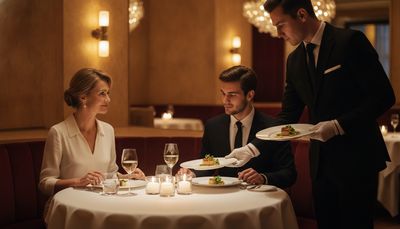
Your sugar daddy has reserved a table at Vendôme in Bergisch Gladbach – Germany's first three-star restaurant, which received its third star in 2022. Now you're wondering: What do I wear? How do I order properly? And how much should I tip at a Michelin-star restaurant? A visit to a starred restaurant can feel intimidating, but with the right preparation you'll move through it as confidently as in a cozy café.
Fine dining is more than just expensive food – it is a cultural experience in which service, atmosphere, and culinary art merge. According to the 2023 Guide Michelin, Germany has 329 starred restaurants, including ten with three stars. Knowing the right etiquette shows not only respect for the chefs' craft but also makes you a confident companion at upscale occasions.
The Right Preparation: Reservations and Research
Michelin-star restaurants are often booked weeks or even months in advance. The Atelier at the Bayerischer Hof in Munich, for example, requires reservations at least four weeks before the desired date. When booking, keep the following in mind:
- Mention special occasions when reserving – many restaurants will then prepare small surprises
- Share allergies and intolerances at the time of booking, not at the table
- Ask about the dress code – it varies from business casual to evening wear
- Ask how long the menu typically lasts – fine dining experiences often take three to four hours
- Research the head chef's cooking style beforehand so you have things to talk about
A look at the restaurant's website and social media channels gives you valuable insights. The restaurant Überfahrt on Lake Tegernsee, for example, regularly shares glimpses of its menu composition on Instagram. This research helps you go into the experience relaxed and shows genuine interest in gastronomy.
Dress Code: What Do You Wear to Michelin-Star Restaurants?
The dress code at fine dining establishments has loosened in recent years, but certain standards remain. At Victor's Fine Dining by Christian Bau in Perl, smart casual is still the minimum, while Aqua in Wolfsburg explicitly asks for upscale evening attire.
For women, that means: an elegant dress or a combination of a blouse and quality trousers is always a safe choice. Avoid outfits that are too revealing – elegance here means subtle sophistication. Jewelry should be understated but look high-quality. Make sure your shoes are polished – sneakers are out of place even in the more modern starred restaurants. You can round off the outfit perfectly with the right skincare routine, since a polished appearance is part of the overall package.
Choose Perfume and Accessories with Care
Strong perfume is taboo in Michelin-star restaurants. The delicate aromas of the dishes can be overpowered by intense scents, which chefs and service staff perceive as disrespectful. Choose a subtle perfume or skip it altogether. The same goes for strongly scented hairspray or perfumed hand creams.
Arriving and Taking Your Seat: The First Minutes
Arrive on time – in upscale establishments, lateness is seen as disregard for the kitchen, which plans its workflow meticulously. Ten minutes of buffer is ideal. When you arrive at the restaurant, you'll be greeted by the reception staff and shown to your table.
The service staff will take your coat, and your handbag may stay at the table but is often placed on its own stool. Wait until the waiter helps you take your seat. The lady is usually seated first. Never put your phone on the table – it should stay silent in your bag. Photos are allowed in many starred restaurants, but ask discreetly and avoid flash.
Understanding the Menu and Ordering with Confidence
Michelin-star restaurants rarely have a classic à la carte selection. Instead, they offer tasting menus with five to twelve courses. Rutz in Berlin, for example, offers an eight-course menu for $270, while The Table Kevin Fehling in Hamburg works with a ten-month lead time.
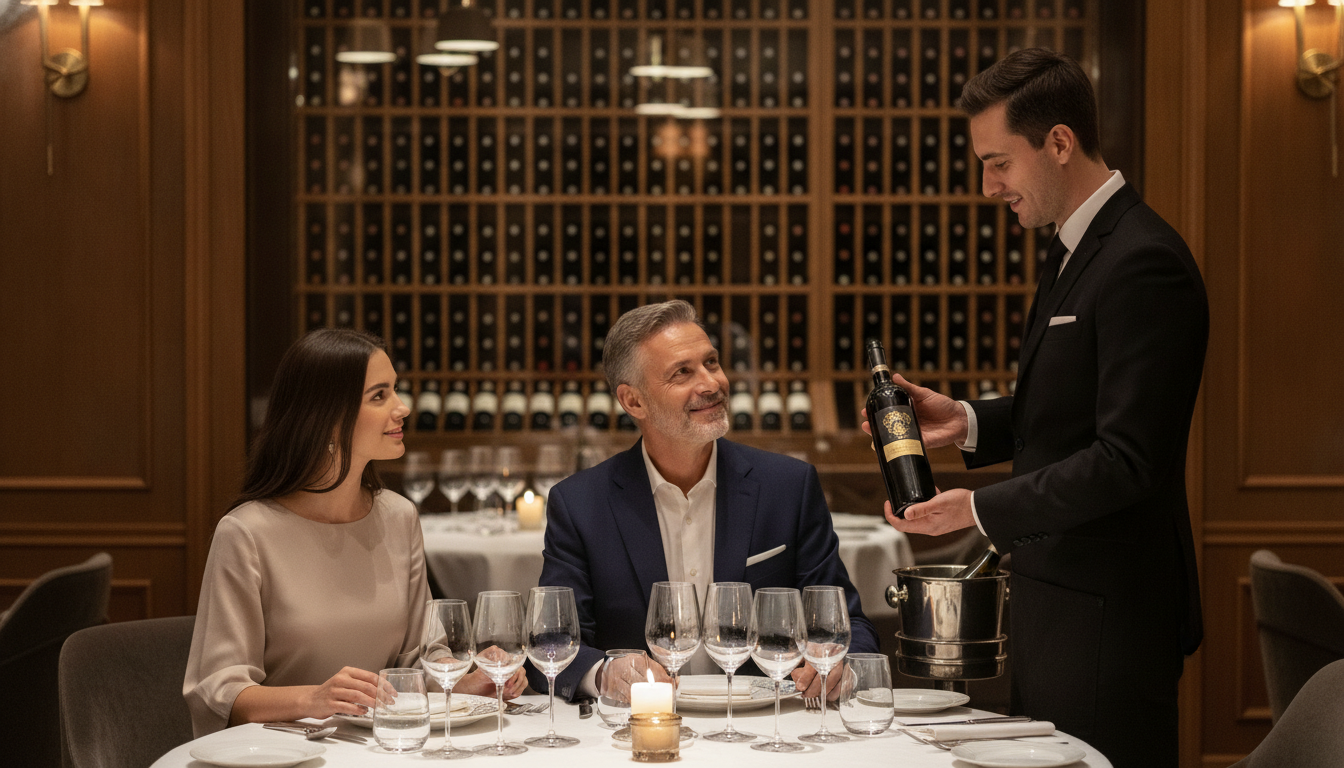
If you're unsure what a term means, ask the sommelier or waiter. These questions are absolutely welcome and show interest. Avoid phrasing like "What do you recommend?" – better is: "I like maritime flavors, which menu would suit that?" That gives concrete pointers and makes you seem engaged.
Wine Pairing and Drinks
Most fine dining restaurants offer a professional wine pairing. The sommelier selects matching wines for each course, often in smaller portions. According to a 2022 study by the German Sommelier Union, 68 percent of guests at starred restaurants opt for the wine pairing. If you'd rather not drink alcohol, there are increasingly non-alcoholic pairings with teas, juices, or kombucha variations too.
Similar to handling the wine list with confidence, the rule is: communicate your preferences openly. Good sommeliers appreciate honest feedback more than feigned expert knowledge.
Table Manners and Rules of Behavior at Fine Dining
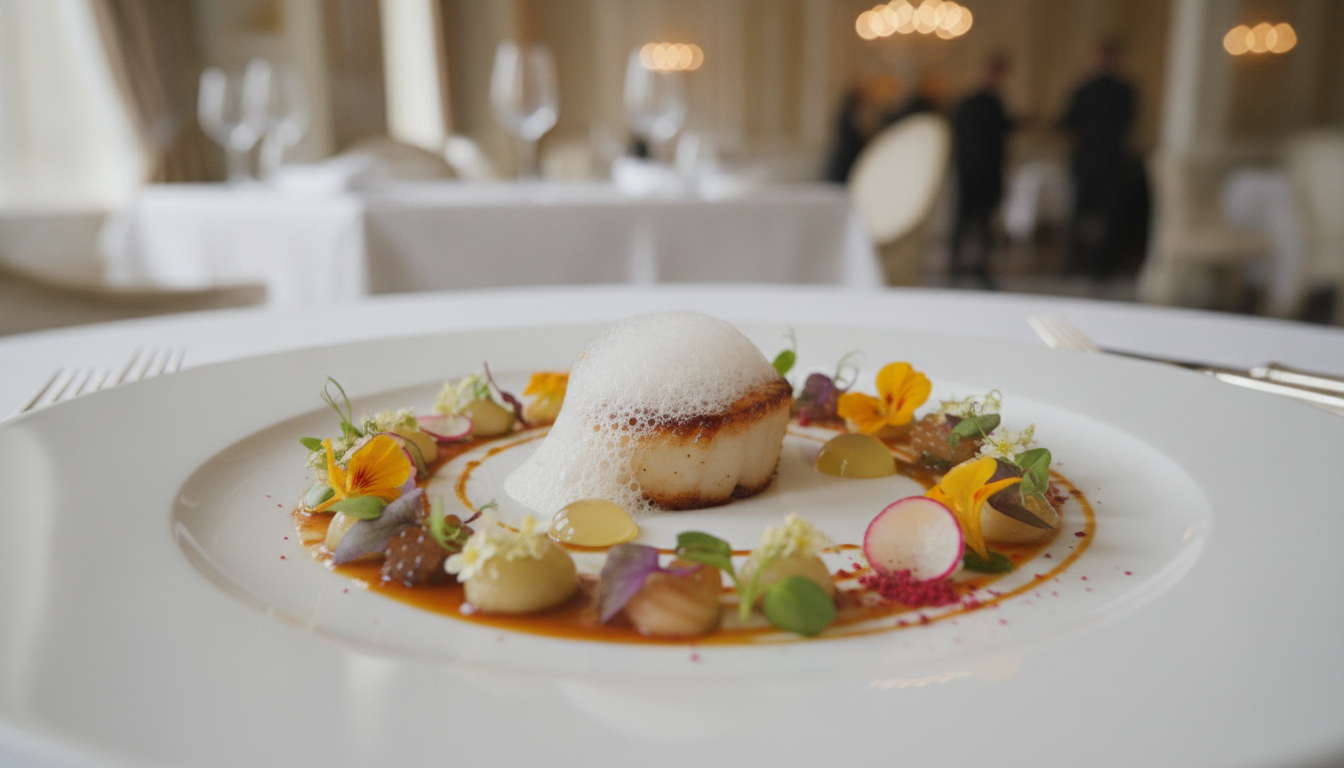
The basic rules of table etiquette also apply in Michelin-star restaurants but are observed with particular care here. Place your napkin on your lap as soon as you sit down. If you step away briefly, place it loosely on the chair; at the end of the meal, to the left of the plate. Don't start eating until everyone at the table has been served – unless the staff explicitly asks you to start right away so the dish doesn't cool.
Use your cutlery from the outside in. If you're unsure, follow the host or wait to see how others start. The fork goes on the left, the knife on the right with the blade facing the plate. After eating, place your cutlery parallel on the plate in the 4:20 position – an international signal that you're finished.
The Subtle Art of Conversation
Good conversation is part of fine dining. Keep the volume moderate – loud laughter or overly emotional discussions seem out of place. Topics like money, politics, or health details don't belong at the table. Art, travel, cuisine, or cultural events are better suited. You can also find the right topic by avoiding typical conversation mistakes, which can happen easily at important meetings.
If the head chef comes to the table personally, show genuine interest in his work. Questions about the origin of the ingredients or the inspiration behind a dish are appreciated. Avoid comparisons with other restaurants – every chef has his own style.
The Service: Interacting with the Staff
The service staff at starred restaurants are highly professionally trained. In Germany, service staff at top establishments often go through years of training. Treat them with respect, but not subserviently. A friendly "thank you" is appropriate; exaggerated courtesies seem artificial.
If something doesn't meet your expectations, communicate it discreetly. Signal a waiter subtly rather than calling out loudly. Raise complaints factually and calmly. Top restaurants respond professionally to constructive feedback and often offer solutions right away.
Special Requests and Allergies
As mentioned, you should declare allergies when reserving. Spontaneous special requests like "no salt" or "vegetarian instead of fish" pose challenges for the kitchen because menus are often prepared hours in advance. In an emergency, an adjustment is of course possible, but don't expect an entirely new creation.
The End of the Evening: The Bill and Tipping
At Michelin-star restaurants, the bill is presented discreetly, usually in a folder. Your companion usually pays, but it doesn't hurt to know the conventions. According to a 2023 survey by the German Hotel and Restaurant Association (DEHOGA), the customary tip at upscale restaurants in Germany is between 10 and 15 percent of the bill.
For a menu price of $220 per person, that would be $44 to $66 in tip for both of you. In some establishments a service charge is already included – then an additional 5 to 10 percent is enough. You can tip in cash or by credit card by stating the total amount: "Make it $450" on a $400 bill signals a $50 tip.
The Farewell
When leaving the restaurant, thank the staff. If you've seen the head chef, a brief personal thank-you is appropriate. Many starred restaurants offer small gifts at the exit, such as handmade chocolates or a business card with a handwritten note – keep these, they make a lovely souvenir.
Common Mistakes and How to Avoid Them
Even experienced fine dining guests sometimes make mistakes. Here are the most common stumbling blocks: arriving late is considered a serious faux pas because the kitchen plans its workflow exactly. The restaurant Schwarzwaldstube in Baiersbronn, for example, reserves the right to give the table away if you are more than 15 minutes late.
Another mistake is using your phone too often. A quick photo is fine, but constant typing or even phone calls show a lack of respect. If you absolutely must be reachable, inform the staff and discreetly leave the room for calls.
Trying to send dishes back because they "don't taste good" is also problematic. In starred restaurants, every dish is a carefully thought-out work of art. If a course really doesn't appeal to you, don't finish it completely – the staff will ask and, if needed, offer an alternative course.
Handling Special Situations
Sometimes unexpected situations arise. What do you do if you accidentally spill wine? Stay calm and discreetly signal the mishap to a waiter. The staff are trained to resolve such situations quickly and unobtrusively. An apology is appropriate, but don't make a big scene of it.
If you feel unwell or nauseous during the meal, inform the staff discreetly. Top restaurants have quiet places to retreat and offer immediate help. Your health comes first – nobody will hold it against you.
After the Visit: Reviews and Feedback
Many starred restaurants value feedback. A handwritten thank-you note or a thoughtful online review is often read personally by management. According to the TripAdvisor portal, 87 percent of three-star restaurants in Germany respond to guest reviews. Be constructive and specific – generic praise achieves little, while concrete details about dishes and service achieve a lot.
If you were especially delighted, mention it in your social circle as well. Word of mouth is valuable for starred restaurants, and you position yourself as a knowledgeable connoisseur of upscale dining.
FAQ: Frequently Asked Questions About Michelin-Star Restaurants
How much does a visit to a Michelin-star restaurant cost?
Prices vary widely. One-star restaurants start at around $90 to $130 per person for a menu, while three-star establishments like Vendôme charge between $275 and $440 per person. Drinks and tip come on top, so an evening for two can easily cost $880 to $1,300.
Can I order à la carte at Michelin-star restaurants?
Many starred restaurants offer only tasting menus, as that lets the kitchen best showcase its creativity. Some one- and two-star establishments do have a reduced menu or smaller menu options at lunch, however. Ask about the options when you reserve.
What happens if I make a mistake with table etiquette?
The staff at starred restaurants are trained to support guests discreetly. Minor mistakes are politely ignored or inconspicuously corrected. Nobody will embarrass you. What matters is a respectful basic attitude – the rest can be learned.
Are children allowed in Michelin-star restaurants?
That depends on the restaurant. Many upscale establishments recommend a minimum age of 12 or 14, since the long menus can be tiring for younger children. Some offer special children's menus. Ask about the house policy when you reserve.
How do I dress properly for a visit to a starred restaurant?
Smart casual to upscale evening attire is standard. Women are well advised to wear an elegant dress or a stylish combination of blouse and trousers. Avoid jeans, sneakers, and clothing that is too sporty. When in doubt, go a bit more formal – overdressed is better than underdressed.
Conclusion: Enjoying the Fine Dining Experience with Confidence
Visiting Michelin-star restaurants is no black magic once you know the basic rules. From booking early to the right dress code to an appropriate tip – with the right preparation you'll move confidently through any fine dining experience. Michelin-star restaurants offer not only exquisite cuisine but also a cultural experience that enriches you culinarily and personally.
What matters: authenticity beats feigned perfection. The staff appreciate honest interest more than feigned expertise. With every visit you'll become more confident and can enjoy the subtle details even more. So accept your sugar daddy's invitation with confidence and discover the fascinating world of haute cuisine – you now have all the tools to enjoy this experience to the fullest. Reserve your next table and see how fine dining changes your appreciation for culinary works of art.