How to Master Table Manners at Your First Fine Dining Dinner
Reading time: 12 minutes
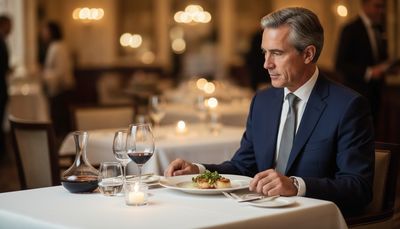
You're sitting across from your sugar daddy in a Michelin-starred restaurant for the first time. Five different forks, three knives and glasses in four sizes are laid out in front of you – and your pulse is climbing. This is exactly the moment that separates the pros from the novices, because perfect table manners at a fine dining dinner aren't an old-fashioned luxury, they're your key to a confident presence in the world of fine dining.
The good news: with the right basics, you can handle any culinary situation with ease. This guide shows you how to impress at your first exclusive dinner, not just with your charisma but with flawless manners too.
Why Table Manners at a Fine Dining Dinner Go Beyond Small Talk
Studies from the University of California show that 87 percent of business people and wealthy individuals pay attention to their dinner companion's table manners. In upscale circles, these details are seen as a direct indicator of your social skills and self-assurance.
In sugar dating, that means your sugar daddy is taking you into his world – to business dinners, exclusive events or private celebrations. There, you represent not only yourself but him as well. Anyone who masters dinner etiquette shows respect, elegance and the ability to move comfortably in upscale social circles.
According to the German Knigge Council 2025, a lot has been modernized, but the basic etiquette in fine dining restaurants remains timeless. Knowing these fundamentals gives you a decisive advantage – especially if this is your first time in this environment.
Cutlery Signals: How to Communicate Without Words
Using your cutlery correctly is about more than getting food from the plate to your mouth. It's a language of its own, understood in upscale restaurants around the world. The position of your cutlery sends clear signals to the waitstaff and shows how familiar you are with fine dining.
Basic Rules for Place Settings
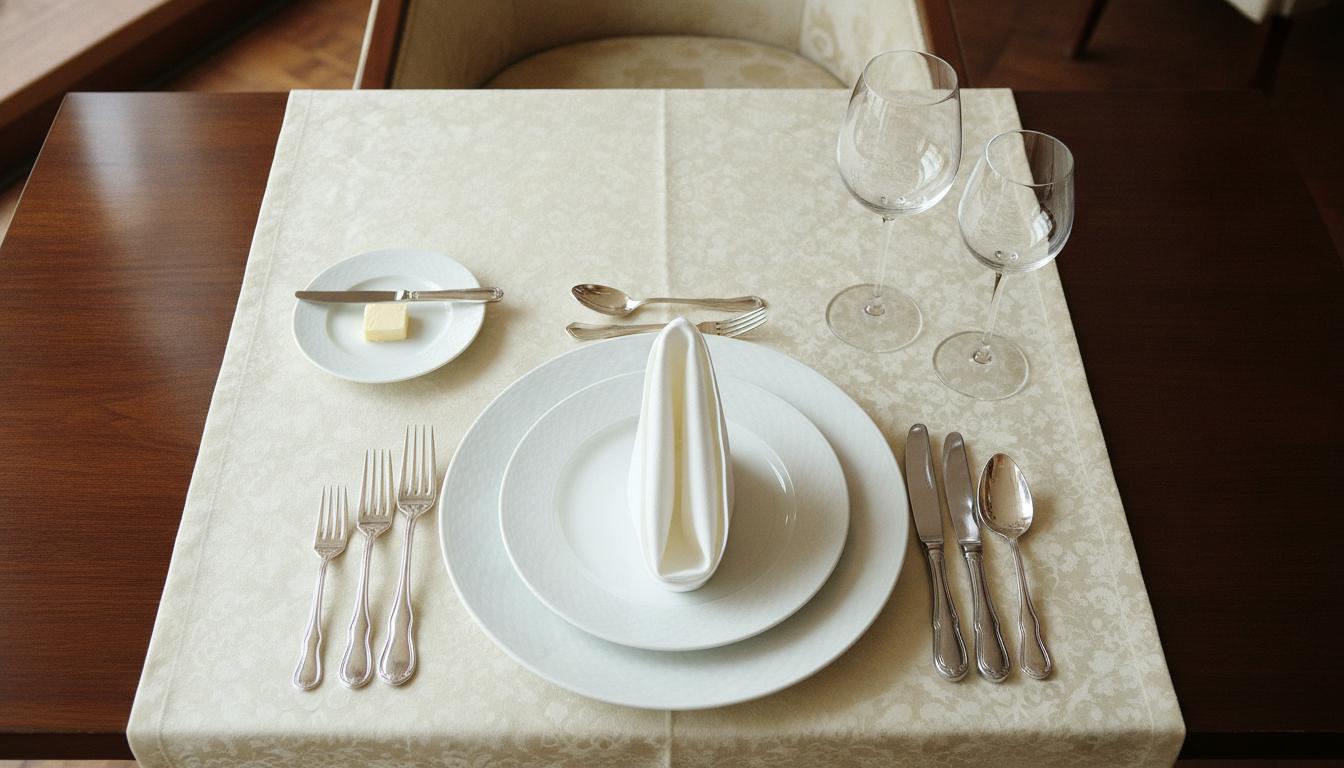
Cutlery is laid out in the order of the courses, from the outside in. So you work your way inward, one piece at a time, starting with the outermost. At a classic four-course menu at Restaurant Vendôme in Bergisch Gladbach, Germany, for example, the fish fork sits on the far outside and the main course fork sits right next to the plate.
Remember this international cutlery language:
- Cutlery in a V-shape on the plate (the "twenty past four" position): You're taking a break but aren't finished yet
- Cutlery side by side in the 5:25 position: You've finished the course
- Knife and fork crossed: In some countries a sign that you didn't enjoy the food – better to avoid
- Cutlery with the handles pointing to the right: Universal signal for "You may clear the plate"
During your dinner, never rest cutlery on the tablecloth. Once used, it stays on the plate – even between bites. That prevents stains and shows you know the basics.
Using Specialty Cutlery Correctly
For oysters, you use the small oyster fork to gently loosen the meat from the edge of the shell. Snails are held with special snail tongs while you pull the meat out with the small fork. You can practice these details at a caviar tasting or in other fine dining situations.
In restaurants like Aqua at the Ritz-Carlton Wolfsburg in Germany, you may be faced with as many as seven different pieces of cutlery. The golden rule: if you're unsure, briefly watch the staff or other guests. Nobody will judge you for pausing a moment.
Napkin Etiquette: The Underrated Art of the Cloth Napkin
The napkin is your constant companion at a fine dining dinner, and handling it correctly is part of the basics of polished restaurant behavior. Once everyone is seated, you take your napkin, fold it once in the middle and place it on your lap – never tucked around your neck or into your collar.
The folded side faces you, the open side faces your knees. That way you can discreetly use the inside to dab your mouth without any stains showing. Dab gently – never wipe or rub.
Napkin Signals Everyone Should Know
If you briefly leave the table during the meal, place the napkin loosely folded on your chair or over the armrest. That signals: I'll be right back. After the meal, you place the napkin loosely folded to the left of your plate – not neatly folded, as that's the staff's job.
One detail many people don't know: in upscale restaurants, the staff will refold your napkin when you leave the table. This is a service standard at establishments like Rutz in Berlin or The Table Kevin Fehling in Hamburg.
Posture and Presence at the Table
Your posture says more about you than a thousand words. Sit upright but relaxed. Your forearms rest lightly on the edge of the table, never your elbows. Your feet are planted parallel on the floor; crossed legs look too casual in this setting.
The distance from the table should be about a hand's width. That lets you eat elegantly without leaning over your plate. This very posture conveys confidence and elegance – qualities that are especially appreciated at fine dining in Michelin-starred restaurants.
Eye Contact and Attention
During the meal, your smartphone stays in your bag. Even a quick glance at the screen is seen as disrespectful in upscale circles. Studies from Cornell University from 2024 show that smartphones at dinner reduce perceived conversation quality by 43 percent.
Focus on the person across from you. Hold eye contact when you clink glasses – in Germany, looking elsewhere while doing so is considered rude. You lift the glass by the stem, not the bowl, to avoid fingerprints and to keep your body heat from affecting the wine.
The Right Pace and Coordination at the Table
At a multi-course meal, you eat in rhythm with the table. Don't start until everyone has their food, unless the host or your companion explicitly invites you to. Finish each course at about the same time as the others – not too fast, not too slow.
A rule of thumb: upscale restaurants typically allow 15 to 25 minutes per course. At a five-course menu at Waldhotel Sonnora in the Eifel region of Germany, for example, the whole dinner takes about two and a half to three hours. Enjoy that time mindfully and don't rush.
Handling Tricky Dishes
Fish is never cut but portioned with the fish fork. The fish knife is only used to lift off the skin and separate the bones. In Germany you may cut asparagus with a knife – in France that's considered a faux pas, and it's eaten entirely with the fork.
You break bread into bite-sized pieces and butter them one at a time. Never butter the whole roll at once. Soup is spooned away from you, not toward you. At the end, you may tilt the bowl slightly away from you to reach the last bit.
Drinks Etiquette: From Aperitif to Digestif
Choosing the right drinks and handling them properly is part of table manners at a fine dining dinner. If your sugar daddy brings in a sommelier, leave the wine selection to him or the expert – but do show interest and ask questions. It shows curiosity and a willingness to learn.
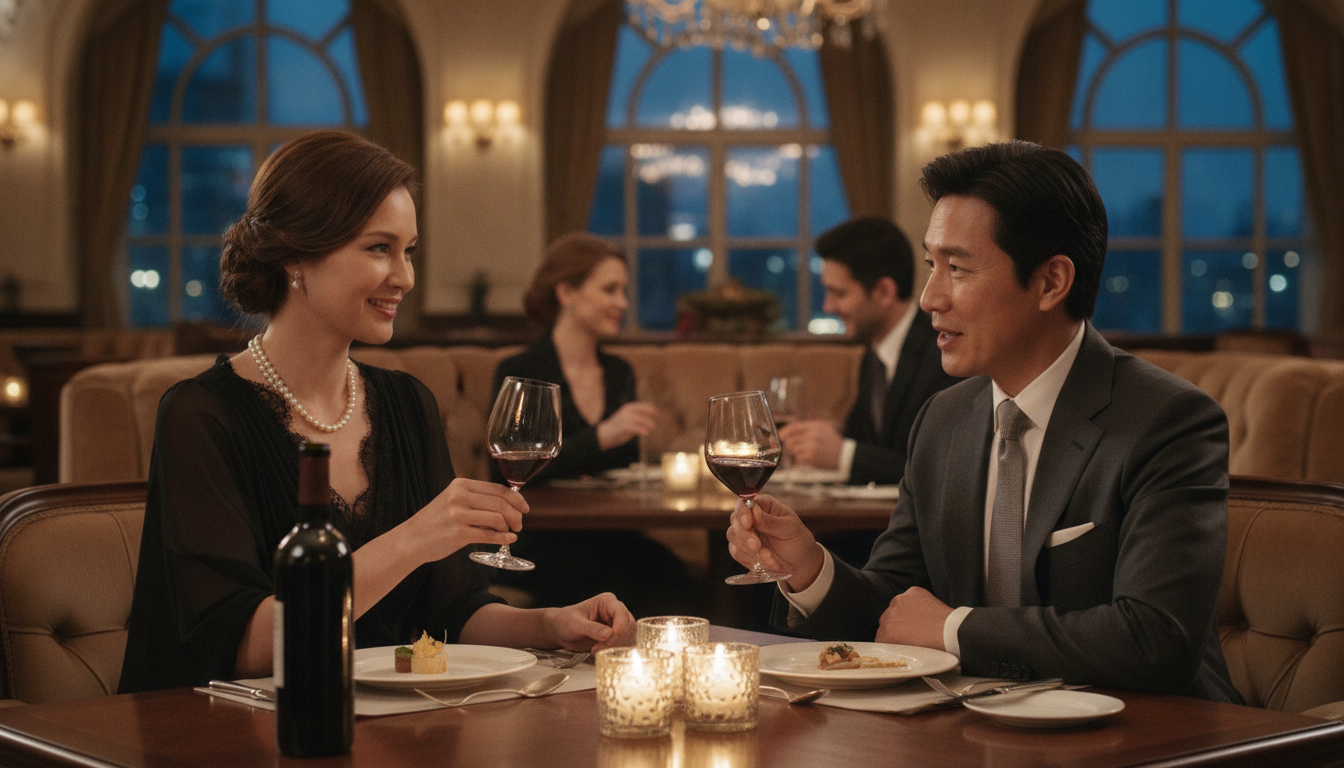
When toasting: hold eye contact, gently touch the glasses together (with fine crystal, it's better to simply raise your glass toward the other person without touching) and only then drink. The details on wine etiquette will help you navigate the wine list with confidence.
Water, Wine and the Right Order
Your glasses are placed to the right, above the knives. From right to left you'll usually find: water glass, white wine glass, red wine glass and possibly a champagne flute. Never reach across the table to get your glass – it looks inelegant.
You may drink water between wines to cleanse your palate. Never empty your glass in one go, and don't refill it yourself when staff are present. In upscale establishments, your glass is discreetly topped up once it's half empty.
Conversation at Dinner: What to Say and What Not To
Table manners include not only physical etiquette but also conversational culture. Avoid topics like politics, religion, illness or money while eating. This basic rule applies especially at your first fine dining dinner, when you're still getting to know your companion's preferences.
Better topics include travel, art, culture or the quality of the food. A sincere compliment about the restaurant or the wine selection is appreciated. You'll find more on problematic conversation topics in our article on conversation mistakes on a first date.
Showing Gratitude and Appreciation
Thank the staff – not effusively, but politely. A "Thank you" or "That looks wonderful" when your plate is served shows good manners. After the meal, you thank your host for the invitation, and never loudly ask for the check.
In upscale restaurants, the bill is presented discreetly at the table, or your companion has already taken care of it in advance. As a sugar baby, it's perfectly fine to thank him for the experience without reaching for your own wallet – as long as this was discussed beforehand.
Dress Code: The Visual Side of Etiquette
Before you even sit down at the table, your clothing already communicates your attitude toward the occasion. Michelin-starred restaurants usually call for an upscale dress code – a cocktail dress or elegant pantsuit for women, a suit and tie for men.
Find out the restaurant's dress code in advance. Vendôme, for example, asks for "smart casual to business," while Aqua expects "elegant casual." When in doubt: better slightly overdressed than underdressed. The right outfit underlines your appreciation for the occasion.
Common Mistakes and How to Avoid Them
Even with a solid grasp of the basics, mistakes happen. The most important thing: stay calm and composed. If you knock over a glass, apologize briefly and let the staff handle it. Don't loudly discuss the incident or draw excessive attention to yourself.
Avoid these classic slip-ups: using your cutlery as a pointer, talking while chewing, tasting food from someone else's plate (unless explicitly offered), leaving lipstick on the rim of your glass (blot it with your napkin beforehand), or criticizing your food before you've tried it.
Dealing with Uncertainty
Nobody expects you to know every nuance of international dinner etiquette. If you're unsure, follow your host's lead or briefly watch the other guests. A discreet question like "How is this dish traditionally eaten?" comes across as charming and interested, never clueless.
In upscale circles, a willingness to learn is valued. Anyone who openly admits it's their first time in a three-star restaurant usually meets with understanding and support. Authenticity beats forced perfection.
International Differences in Fine Dining Behavior
Table manners vary considerably between cultures. In the US, the left hand stays in your lap when you're not using it – in Europe that's considered impolite. In France, bread is never cut; in Germany that's acceptable.
According to the Protocol Institute Vienna 2025, you should briefly read up on local customs before international dinner invitations. In Japan, for example, slurping your soup is welcomed, while in Germany it's a no-go. This cultural sensitivity shows worldliness and respect.
Practice Makes Perfect: How to Train for the Real Thing
You learn table manners at a fine dining dinner best through practice. Start by visiting upscale but not overly exclusive restaurants, alone or with girlfriends. Observe other guests' behavior, study how service flows, and test your knowledge in a relaxed atmosphere.
Some hotels offer special etiquette courses – the Adlon in Berlin, for example, regularly holds "Fine Dining Workshops" for 180 euros per person. An investment that pays off especially in sugar dating, where events like this can become routine.
At home, you can practice the place setting: arrange different glasses and pieces of cutlery in the correct order and rehearse the movements. YouTube channels like "Gentleman's Gazette" offer detailed tutorials on cutlery use and table culture.
FAQ: The Most Important Questions About Table Manners at a Fine Dining Dinner
How should I behave at a fine dining dinner if I'm vegetarian?
Ideally, tell the restaurant about your diet when you make the reservation. In upscale establishments this is completely normal and handled professionally. At the table itself you don't have to justify yourself – a quick "I'm vegetarian" is enough if you're asked.
What do I do if I don't like a dish or don't recognize it?
Try at least a small portion and arrange the rest discreetly on your plate. Upscale restaurants don't expect you to clean your plate. If you don't recognize something, feel free to ask – curiosity is appreciated. The staff will gladly explain how it's prepared or where it comes from.
Am I allowed to take photos of my food at a fine dining restaurant?
Most Michelin-starred restaurants allow discreet photography, but it should be done quietly. Avoid flash, don't stand up, and don't disturb other guests. Some exclusive establishments ban photos entirely – check in advance or politely ask. Wait to post pictures on social media until after your visit.
How do I handle it if something spills on my clothes during the meal?
Stay calm and discreetly dab the stain with your napkin. Avoid frantic movements or loud comments. In upscale restaurants the staff will often offer help – accept it gratefully. Some establishments even keep special stain removers on hand for emergencies.
When is the right time to get up from the table?
Ideally, wait until the end of dessert or coffee. If you need to use the restroom in between, choose a pause between courses. Excuse yourself briefly, place your napkin on your chair and return promptly. Never leave the table while a course is being served or while others are eating.
Conclusion: Confidence Through Preparation and Authenticity
Table manners at a fine dining dinner aren't rocket science, but a learnable skill that opens doors to exclusive worlds. With a grasp of cutlery signals, napkin etiquette and polished restaurant behavior, you'll handle any fine dining situation with elegance.
The most important rule remains: authenticity comes before perfection. Nobody expects you to master every fine detail of a royal banquet. Your willingness to learn, your attentiveness and your respectful treatment of staff and fellow guests matter more than placing your fork perfectly in the 5:25 position.
Use every visit to an upscale restaurant as a learning opportunity. Over time these routines become second nature, and you'll move through a seven-course menu with the same ease as through your favorite café. You'll radiate that confidence – and that's exactly what makes the difference between nervously going along and shining with poise in the world of fine dining.
Start preparing today: research Michelin-starred restaurants in your area, book a table for a special dinner and put your new knowledge into practice. Your next fine dining dinner won't just be a culinary experience, but a personal triumph for your growing elegance.